


A great deal of work at height moves around a site rather than staying on one wall. A run of ceilings in a commercial fit-out, a stairwell repaint and the fascia along a single-storey home are all examples. Work like this needs a guarded platform at the right height that can follow the job, without the time and footprint of a fixed scaffold built around the whole building. WorkSafe NZ’s guidance on equipment for working at height treats choosing and using the right access equipment as an important part of managing a safe worksite. A mobile scaffold tower is one such option, a free-standing aluminium scaffold on lockable castors that rolls from one work area to the next.
Orange Scaffold supplies Layher mobile towers, made in Germany, in standard and narrow-gauge sizes. The company has provided scaffolding across Auckland for more than 20 years, on projects ranging from residential repaints to large commercial sites. Tower sizes, working heights, the WorkSafe NZ rules that apply and the steps for a safe set-up are covered in the sections below:
- What Is a Mobile Scaffold Tower?
- Mobile Scaffold Sizes and Working Heights
- Mobile Scaffold Rules and Safety in New Zealand
- Setting Up a Mobile Scaffold Tower
- Frequently Asked Questions
- Hiring a Mobile Scaffold Tower in Auckland
What Is a Mobile Scaffold Tower?
How a scaffold is supported decides how it can be used. A fixed scaffold stands on base plates or base jacks and stays in position until the job is finished. A mobile scaffold sits on castors so it can be moved across a firm, level surface between work areas. WorkSafe NZ classes these towers as freestanding scaffolds. It also notes that mobile aluminium scaffold is more commonly used than fixed aluminium scaffold, with both generally built from the same components. Aluminium keeps each part light enough to carry and assemble by hand, while the finished tower locks together into a rigid structure with guardrails around the working platform. Typical uses include:
- Painting, plastering and ceiling work in homes and commercial interiors
- Fascia, soffit and spouting work on single-storey homes
- Electrical, lighting and ventilation installation during fit-outs
- Maintenance work in warehouses, factories and retail spaces
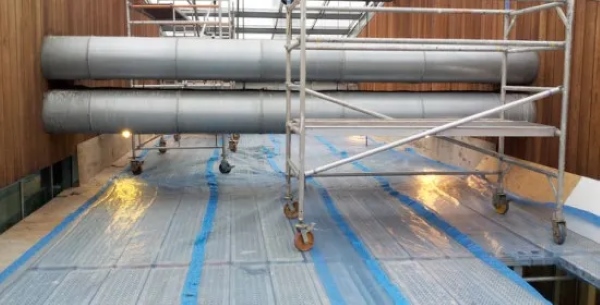
Where work runs along a full elevation for weeks at a time or reaches across several storeys, a fixed scaffold is generally the better fit. How each option suits different jobs is set out in Orange Scaffold’s overview of the types of scaffolding in New Zealand.
Mobile Scaffold Sizes and Working Heights
Platform size shapes how a tower performs on a job. It decides how many people can work side by side, how much material the deck can hold and how tight a space the tower can work in. Orange Scaffold’s standard tower has a platform 2.8 m long and 1.5 m wide, giving room for people, tools and materials. The narrow-gauge tower measures 2.85 m long and 0.8 m wide for narrow alleys, corridors and compact indoor spaces. The heights and loads below are Layher NZ’s published figures for the comparable models in its mobile scaffold tower range. Layher measures working height as two metres above the top platform.
| Tower | Platform size | Comparable Layher model | Maximum working height | Maximum load |
|---|---|---|---|---|
| Standard tower | 2.8 m × 1.5 m | Uni Wide | 13.38 m | 765 kg |
| Narrow gauge tower | 2.85 m × 0.8 m | Uni Standard | 13.38 m | 380 kg |
Each tower is built up frame by frame to suit the job, so a tower set up for a four-metre ceiling uses fewer frames than one reaching a third-storey window. Further detail on how the system is engineered is covered in Orange Scaffold’s guide to Layher scaffolding.
Mobile Scaffold Rules and Safety in New Zealand
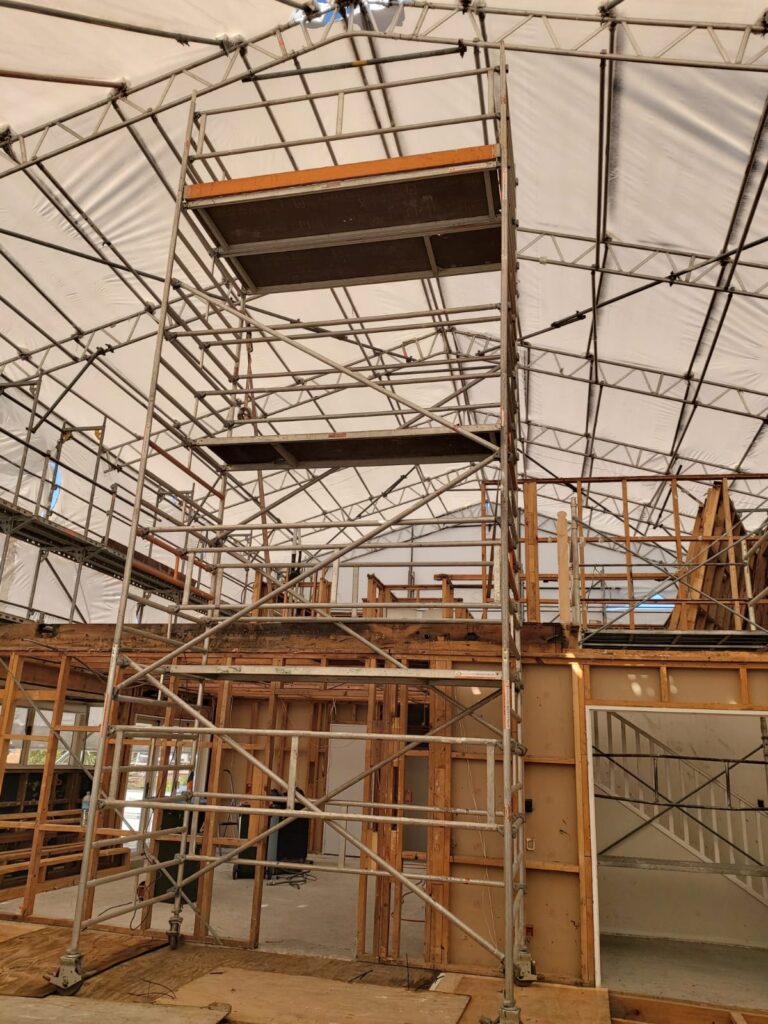
Being freestanding and easy to move is what makes a mobile tower so useful. It is also why the safety rules for towers concentrate on stability. WorkSafe NZ’s Scaffolding in New Zealand guidelines require freestanding scaffolds to be stabilised against overturning, and they note that mobile scaffolds are particularly prone to tipping while in use. The certification and signage requirements that apply to scaffolding generally sit alongside those stability rules. The key points are:
- WorkSafe limits the top working platform to three times the minimum base dimension on towers over 2 m high, and two times on towers under 2 m, under normal weather conditions. Outriggers or larger base frames can be used to increase the base dimension.
- WorkSafe calls for castor brakes to be applied while the tower is in use. Each castor must be labelled with its safe working load and have a working brake or locking system.
- WorkSafe states that people and materials must be off the tower before it is moved. The ground must be firm, clear and level, with no overhead power lines or obstructions within 4 m of the line of travel.
- WorkSafe advises against moving mobile scaffolds in windy conditions.
- WorkSafe notes that towers generally need bracing on all sides, with plan bracing unless the lowest fully decked platform is under 3 m high.
- WorkSafe’s mobile scaffold inspection checklist looks for guardrails, midrails and toeboards at all levels. It also checks that the tower sits more than 2 m from the edge of a building, floor penetrations and voids.
- WorkSafe allows a competent person to erect towers up to 5 m, measured to the highest component. Anything taller must be erected by, or under the direct supervision of, the holder of a SARNZ Certificate of Competence.
- Where a person could fall 5 m or more, WorkSafe requires notification of the work at least 24 hours before erection or dismantling begins.
- WorkSafe requires access points to be signed as incomplete or unsafe during erection. SAFE SCAFFOLD signs are fitted once the tower is complete and ready for use.
The wider legal framework, including inspection intervals and the ScaffTag system, is explained in Orange Scaffold’s article on WorkSafe NZ scaffolding requirements.
Setting Up a Mobile Scaffold Tower
Assembly order matters on a mobile tower, since the bracing, decks and guardrails each add stability as the structure rises. WorkSafe requires prefabricated aluminium scaffolds to be erected according to the manufacturer’s specifications and instructions, particularly the maximum load per bay and the maximum height of the system. Each Layher tower comes with its own assembly instructions, and those take precedence over any general sequence. The order below follows WorkSafe guidance and Layher’s recommendations for its rolling towers:
- Check the ground is firm, level and clear, with no overhead power lines or obstructions nearby.
- Read the manufacturer’s assembly instructions for the tower model and the height being built.
- Fit the castors, level the base using the adjustable spindles and lock every brake.
- Fit stabilisers, a base beam or ballast where the planned height and setting call for them.
- Add frames level by level, fitting the bracing as each level goes up.
- Install decks at 2 m intervals, as Layher recommends, so guardrails can be fitted from the level below.
- Fit guardrails, midrails and toeboards around the working platform.
- Climb inside the tower using the built-in ladder frames and the deck hatch, never up the outside.
- Inspect the finished tower and fit the SAFE SCAFFOLD sign before anyone works from it.
Frequently Asked Questions
The four questions below cover tagging, height limits, certification and moving a tower. Each answer draws on WorkSafe NZ guidance or Layher’s published specifications.
Does mobile scaffolding need to be tagged?
Yes, in most cases. WorkSafe NZ requires every scaffold, regardless of height, to carry a tag at its access points. The tag records the scaffold’s status, who erected it, its intended use, duty loading and inspections. Minor scaffolds that are lightweight, portable, single bay and have a platform no higher than 2 m may be excluded where appropriate.
How high can a mobile scaffold go?
Layher NZ lists a maximum working height of 13.38 m for its Uni Standard and Uni Wide towers, with the top platform at 11.38 m. On any individual job, the usable height also depends on WorkSafe’s height to base ratio, which calls for outriggers or a wider base as a tower goes higher.
Do you need a certificate to put up a mobile scaffold?
Under WorkSafe NZ guidance, a competent person can erect a tower up to 5 m, measured to its highest component. Anything taller must be erected by, or under the direct supervision of, a SARNZ Certificate of Competence holder. If you are unsure which applies to your job, get in touch for advice on the right set-up.
Can you move a mobile scaffold with someone on it?
No. WorkSafe NZ states that mobile scaffolds must not be ridden while being moved, and that people and materials must be off the tower before it shifts. The guidelines list a sudden stop while moving as one of the situations that raise the risk of a tower tipping.
Hiring a Mobile Scaffold Tower in Auckland
Choosing a tower comes down to the height of the work, the space around it and how often the platform needs to move. Orange Scaffold supplies Layher mobile towers for hire in standard and narrow-gauge sizes, each with ladder frames built in and closely spaced rungs that remove the need for a separate ladder. Where a project needs more than one form of access, towers can be planned alongside residential scaffolding and edge protection, so each part of the job is covered. Talk to our friendly, experienced team about mobile towers for your next job and we will put together a clear, obligation-free quote.